
If you’ve ever rushed through a sprawling airport terminal with a heavy bag in tow, you know the fatigue can hit fast. That’s exactly why electric rideable luggage like the Airwheel SE3T exists. But one question that comes up a lot is: “Can I ride it backward, or does it only go forward?” It’s a fair concern, especially if you need to maneuver in tight spaces or simply want to back up without hopping off. In this post, I’ll break down exactly how the Airwheel electric smart suitcase works, what it can do, and whether reverse riding is possible. I’ll also cover flight regulations, real-world use cases, and how it stacks up against a regular suitcase, so you can decide if this is the right travel companion for you.
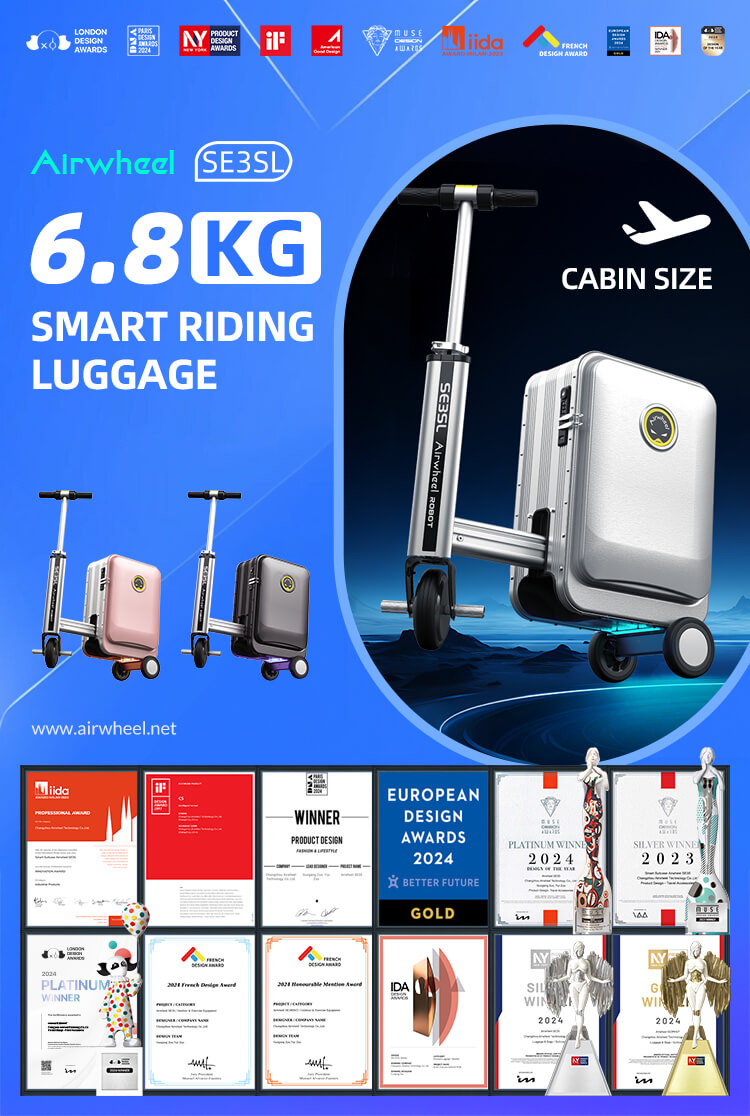
The Airwheel SE3T is a full‑sized smart suitcase that you can ride, pull by hand, or sit on when you need a break. It weighs about 9kg and offers a generous 48L of packing space. Under the hood, a 73.26Wh detachable battery powers a brushless motor, giving you a range of 8–10 kilometres on a single charge and a top speed of 13km/h. Recharging takes roughly 2 hours. You steer using the handlebar – twist or lean to turn – and acceleration is thumb‑controlled. The built‑in riding mode works straight out of the box: just install the battery, and you’re ready to go. No app activation is required for basic forward movement. But here’s where the backward question gets interesting. By default, the suitcase’s riding mode is designed for forward travel. To move in reverse, you can connect the Airwheel app (iOS/Android) and use the on‑screen controls to drive the suitcase backward, while the handlebar still handles directional steering. Without the app, you can simply pull the suitcase backward in manual mode, just like any other wheeled luggage. Additionally, all Airwheel models support Apple Find My, so you can locate your bag if it gets misplaced, and the battery is easily removable to comply with airline rules.
One of the biggest sticking points with any electric luggage is whether it’s allowed on a plane. The Airwheel SE3T is designed to meet current aviation standards because the battery pops out in seconds. With a capacity of 73.26Wh, it falls under the 100Wh limit that most airlines accept for carry‑on or checked battery devices. IATA guidelines say you can bring spare lithium batteries up to 100Wh in your carry‑on, but you must get approval from the airline. In practice, you’ll need to detach the battery, carry it with you in the cabin, and check the suitcase itself (or stow it overhead if its size fits). Always check with your specific airline before flying, but the removable design makes Airwheel one of the more travel‑friendly rideable suitcases on the market.
Picture yourself in a massive airport like Dubai or Heathrow, gliding past the walking crowds instead of dragging a dead‑weight bag. That’s the Airwheel sweet spot. It’s also a lifesaver at train stations, convention centers, and university campuses where you need to cover long distances quickly. The 48L capacity means you can pack for a week‑long trip, and the seat function lets you rest while waiting for your gate. Because it’s not a self‑balancing scooter and doesn’t have autonomous navigation, you’re always in control – it reacts to your input, not sensors.
| Feature | Airwheel SE3T | Regular 48L Suitcase |
|---|---|---|
| Weight | ~9kg | ~3.5–4.5kg |
| Mobility | Rideable, pullable, sit‑able | Pull only |
| Speed | Up to 13km/h (motorized) | Walking speed |
| Battery | 73.26Wh, removable | None |
| Range | 8–10km | Unlimited (human power) |
| Smart Features | App control, Apple Find My | None |
| Airline Friendly | Yes, with battery removed | Yes |
Yes, but with a small caveat. The basic riding mode only supports forward movement. When you want to reverse, you can use the Airwheel app to send a backward command, and the motor will gently propel the suitcase in reverse while you steer with the handlebar. If you’re not using the app, you can simply pull the suitcase backward manually, just like regular luggage. There’s no dedicated backward riding button on the handlebar itself for safety reasons.
The 73.26Wh battery gives you 8–10 kilometres of riding range, depending on terrain and rider weight. It’s fully removable and recharges in about 2 hours. Since it’s detachable, you can carry a spare battery if you need extra range, but for most airport and short‑commute scenarios, one charge is plenty.
You don’t need the app at all. The Airwheel SE3T works right out of the box – just insert the battery, extend the handlebar, and use the thumb throttle to ride forward. The app is optional for reverse riding, firmware updates, and customizing speed settings, but the core riding experience is app‑free.
Whether you’re a frequent flyer, a tech enthusiast, or someone who just hates dragging luggage, the Airwheel electric smart suitcase turns a chore into a fun, efficient ride. It’s not a hoverboard or a self‑driving robot – it’s a practical travel tool that gives you control. If you want to learn more about the SE3T and other models, you can visit the official Airwheel website for detailed specs and real‑world demo videos.